 Insulation Calculator
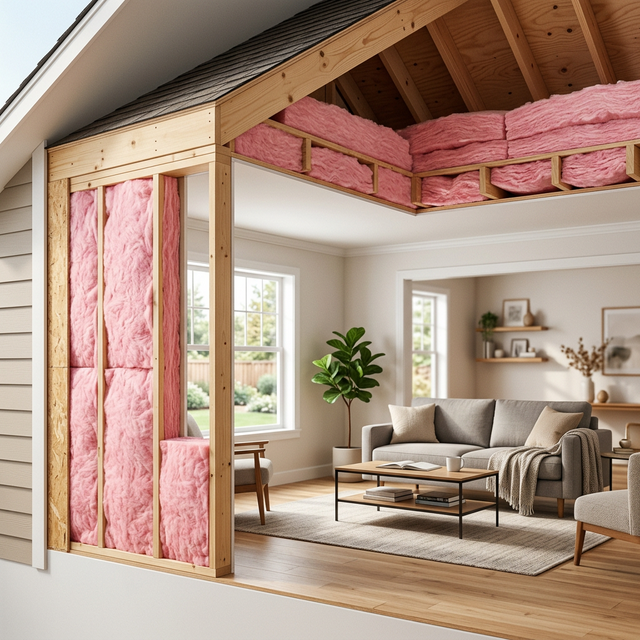
When planning an insulation project, the most fundamental measurement you need is square footage. Whether you're insulating an attic, walls, floors, or an entire home, knowing the total area in square feet (or square metres) allows you to calculate exactly how much insulation material to purchase — saving you both money and unnecessary trips to the hardware store.
Why Square Footage Matters for Insulation
Insulation is sold in rolls, batts, bags, and boards — all measured in terms of coverage area. A standard fiberglass batt might cover 40 square feet, while a bag of blown-in cellulose might cover 30–60 square feet depending on the desired R-value and depth. Without an accurate square footage calculation, you could end up buying too much material (wasting money) or too little (leaving gaps in coverage).
Rule of thumb: Always add a 10% waste factor to your square footage calculation to account for cuts, trimming around obstacles, and fitting errors.
How to Calculate Square Footage for Insulation
The basic formula for calculating square footage is simple:
Square Footage = Length × Width
For rectangular rooms, measure the length and width in feet and multiply. For irregular shapes, break the area into rectangles, calculate each one separately, and add them together.
Step-by-Step Process
- Measure the room dimensions: Use a tape measure to record the length and width of each area you plan to insulate. For walls, measure the wall height times the wall length.
- Subtract openings: For wall insulation, subtract the area of windows and doors. A standard window is roughly 12 square feet and a door about 20 square feet.
- Calculate total area: Add up all the rectangular sections to get your total square footage.
- Add waste factor: Multiply your total by 1.10 (for 10% waste) to get the final material estimate.
- Divide by coverage per pack: Check the insulation product's label for its coverage area and divide your total by that number to get the number of packs needed.
Square Footage Examples by Project Type
Attic Insulation
For attic insulation, measure the floor of the attic (not the roofline). A typical attic in a 1,500 sq ft home might have 1,200 sq ft of insulate-able floor space after accounting for eaves and obstacles. At R-38 with blown-in cellulose, you'd need approximately 30–40 bags.
Wall Insulation
For exterior walls, measure each wall's height by its length. A 10-foot by 8-foot wall is 80 square feet. Subtract a 3×5 window (15 sq ft) to get 65 net square feet. For a standard 2×4 stud wall with 16-inch spacing, fiberglass batts at R-13 cover approximately 40 sq ft per bundle.
Floor Insulation
Floor insulation follows the same room dimension calculations. A 12×14 room is 168 square feet. With joist spacing of 16 inches on center, you'll need batts that fit between the joists with no compression or gaps.
Common Mistakes to Avoid
- Forgetting to subtract openings: Windows, doors, and built-in features don't need insulation. Subtract their area from your totals.
- Ignoring stud spacing: The width of insulation batts must match your stud spacing (16" or 24" on center). Standard batts won't fit non-standard spacing.
- Compressing insulation: If you buy R-19 batts for a 2×4 wall cavity, you'll have to compress them — which dramatically reduces their effective R-value.
- Skipping the waste factor: Real-world installations always require more material than the net area suggests. Budget for 10-15% extra.
Try Our Free Insulation Calculator
Skip the manual math — enter your room dimensions and get instant material estimates with our free online calculator.
Calculate Now →Using Our Square Footage Calculator
Our free insulation calculator makes it easy: simply enter your room's length and width (or input the square footage directly), select your insulation type and target R-value, and you'll instantly see how many packs of insulation you need — including the waste factor. The calculator supports both metric and imperial units, making it useful whether you're measuring in square feet or square metres.
Final Thoughts
Calculating insulation by square footage is the first and most important step in any insulation project. Get this number right, and the rest of the process becomes straightforward. Use a measuring tape, do the math (or use our calculator), add your waste factor, and you'll have an accurate shopping list ready before you head to the store.