Insulation Calculator
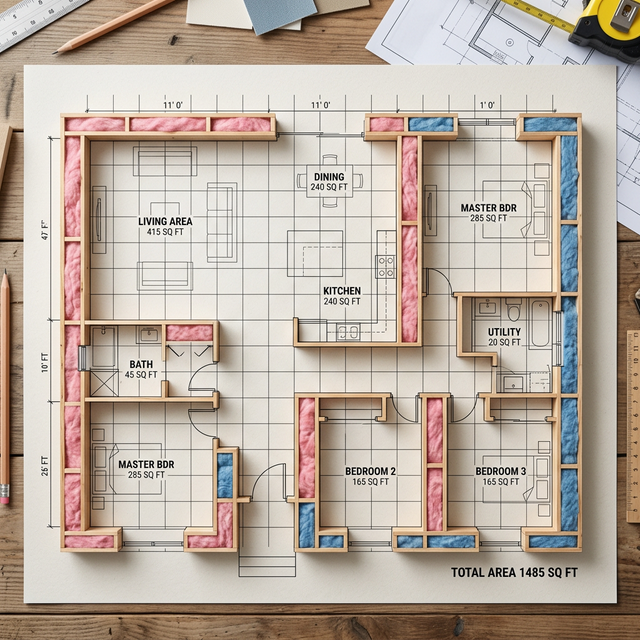
Our free insulation calculator is designed to help homeowners and contractors easily
determine the exact amount of insulation needed for any project. Whether you're working on walls,
ceilings, or floors, this tool allows you to input your room dimensions and instantly calculate your
requirements. By figuring out how much insulation do I need, you can
accurately plan your budget, estimate your insulation calculator cost,
and significantly improve your home's energy efficiency.
Why Proper Insulation Matters
Installing the correct amount of insulation is one of the most effective ways to upgrade your home. The
benefits include:
- Reduced heating and cooling costs: Proper insulation minimizes heat loss in the
winter and heat gain in the summer.
- Improved indoor comfort: Eliminate drafts and maintain a consistent temperature in
every room.
- Improved energy efficiency: Less strain on your HVAC system means lower energy
consumption.
- Reduced carbon footprint: Lower energy use directly translates to fewer greenhouse
gas emissions.
Understanding R-Value and Thermal Resistance
The performance of insulation is measured by its thermal resistance, commonly known as its R-value. A
higher R-value indicates better resistance to heat flow. Using our insulation
calculator r value feature ensures you select the optimal rating for your specific local
climate conditions.
Financial Benefits of Proper Insulation
While installing insulation requires an initial investment, the return on investment (ROI) is
substantial. Proper thermal boundaries lead to long-term energy savings and permanently reduced utility
bills, often paying for the installation cost within a few years.
How to Use Our Free Insulation Calculator
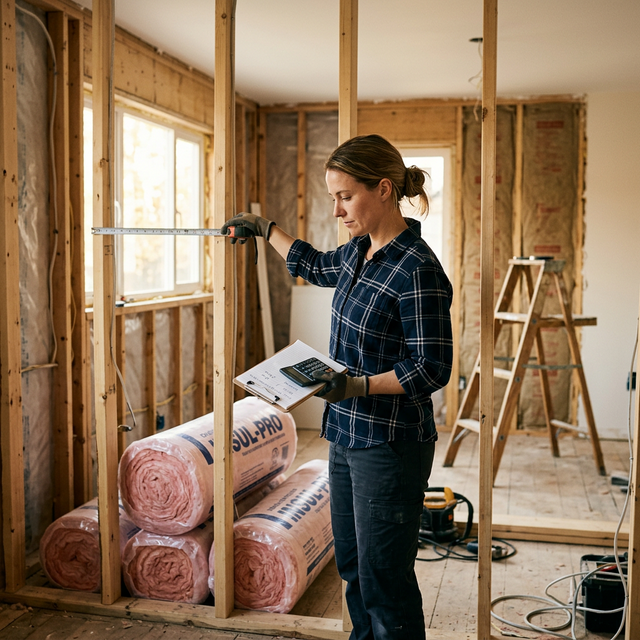
- Measure the Area: Determine the size of the space you need to insulate. You can use
our tool as an insulation calculator square feet for Imperial
measurements, or as an insulation calculator m2 for Metric regions.
- Select the Recommended R-Value: Your local climate zone determines the recommended
thermal resistance requirement. Colder regions generally require much higher R-values for ceilings
and walls.
- Choose Insulation Material: Select the type of insulation you plan to use, such as
fiberglass batts, rolls, blown-in insulation, mineral wool, or spray foam. The calculator will
accurately estimate the total coverage and material packs required based on your selections.
Key Insulation Concepts Explained
BTU (British Thermal Unit)
A BTU is a traditional unit of heat energy measurement. It represents the amount of heat required to
raise the temperature of one pound of water by one degree Fahrenheit. Insulation helps reduce the
total BTUs your heating system needs to generate.
ENERGY STAR
ENERGY STAR is a government-backed symbol for energy efficiency. Products and homes that earn this
certification meet strict energy performance standards, often requiring specific insulation levels
to qualify.
Insulation Thickness
There is a direct relationship between the thickness of an insulating material and its total R-value.
Generally, thicker materials provide higher thermal resistance, although the exact rating depends on
the material's density and specific product type.
Frequently Asked Questions (FAQs)
How much insulation do I need for my attic?
The amount of attic insulation needed depends on your climate zone and current insulation levels.
Most experts recommend achieving an R-value between R-38 and R-60 for optimal attic efficiency. Use
our calculator to convert your attic's square footage into the exact number of packs required.
How much wall insulation do I need for my house?
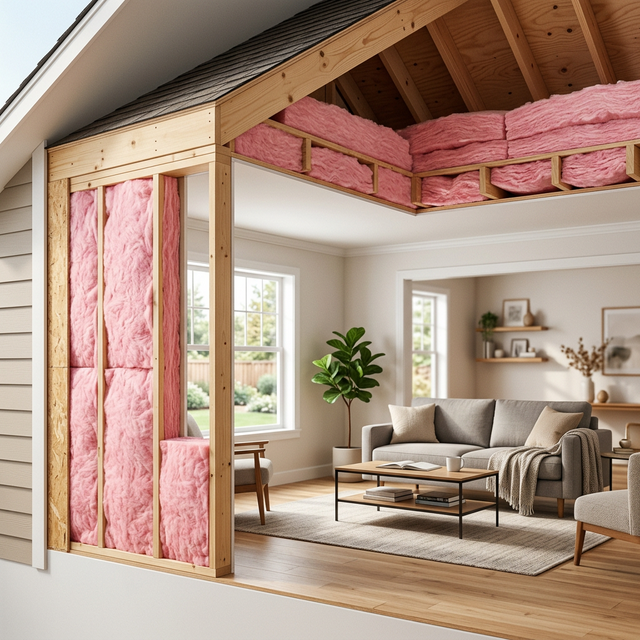
Wall insulation requirements vary based on the depth of your wall studs (typically 2x4 or 2x6). For
standard 2x4 walls, an R-13 to R-15 is common, while 2x6 walls can accommodate R-19 to R-21. Measure
the length and height of your exterior walls to calculate the total square footage.
How do you calculate insulation area in square feet?
To calculate insulation area in square feet, simply multiply the length of the space by its width (or
height, for walls). For example, a 10-foot by 12-foot wall equals 120 square feet. Remember to
subtract the area of large windows or doors from your total.
How much insulation do I need for a 1200 sq ft house?
For a 1200 sq ft house, you will need approximately 1200 square feet of coverage for the ceiling
alone. If you are also insulating walls and floors, you must calculate the area for those surfaces
separately. A standard pack of batts usually covers around 40 to 100 square feet, depending on the
R-value.
How many insulation rolls or batts do I need?
To find out how many rolls or batts you need, divide your total project area by the coverage area
provided in a single package. Always add a 10% to 15% waste factor to account for cutting and
fitting around obstacles.
How many bags of blown-in insulation do I need?
The number of bags needed depends on your target R-value and the total square footage. Each
manufacturer provides a coverage chart on the bag specifying how many square feet one bag covers at
a specific depth and R-value. You divide your total area by that coverage number.
How do I estimate insulation for walls and ceilings?
Estimate the area by multiplying length by width for ceilings, and length by height for walls.
Determine the stud or joist spacing (usually 16 or 24 inches on center) so you buy the correct width
of material. Then, use our tool to seamlessly calculate the required packs.
What R-value insulation do I need for my home?
Your required R-value is heavily dependent on your geographic location and climate zone. Colder
climates require higher R-values (like R-49 to R-60 in attics) to prevent heat loss. Warmer climates
may only require R-30 to R-38 to keep the home cool.
Can I use an insulation calculator by square footage?
Yes, our tool is specifically designed as an insulation calculator by square footage. By entering
your room dimensions or direct area, the calculator will automatically output your requirements in
both square feet and square meters.
 Insulation Calculator